Friday, 27 December 2013

Disco & Lighting Effects

Discos and dance clubs make huge investments to feature the latest lighting and special effects. Club-goers flock to discos not only for the music, but to experience the elements of fun, excitement and atmosphere that disco lighting brings.

Function
Disco lighting serves as an added attraction and enhancement to dance music. Popular discos are known for 
their particular effects, and use them as marketing and advertising tools to draw new customers.

History
Disco lighting effects began in the 1920s, during the "dance hall days." Electric lighting was new at the time, and club owners made the best use of it by installing colored filters to create intimate and exciting moods.

Development
With the growing popularity of rock concerts in the 1960s and 1970s, lighting companies began experimenting with new lighting effects and techniques. As disco music became the dominant musical form, the industry blossomed; creating lighting effects to excite dancers and club-goers, and enhance the nightlife experience.

Types
Numerous types of lighting and effects are in use today, including strobes, color washes, spot lights, moving scanners, lasers and projectors. Other popular effects are mirror balls, fog machines, foamers, bubble makers and confetti shooters.

Future
Disco lighting and effects of the future will feature improvements in recently developed LED bulbs and intelligent moving light fixtures. Lighting manufacturers are also working on 3D holographic projectors and safer, more advanced laser systems.

Monday, 23 December 2013

Guidelines for great stage design:


Not to use black backdrop: If using drape or a curtain as backdrop, not to use black or very dark colours. Must try to break-up the black background with other stage elements. These will help create separation between the speaker and the background on your video recordings.


Absence of clutter: Clutter -- power cables, multiple laptops, projection rigs distracts the eye. Want audience to be able to maintain full attention to the talks and performances.


Decoration: Without a little decoration, your stage will look cold and flat. An interesting art piece, technological artifact or intriguing piece of furniture on stage (consider an object that speaks to event's theme) will give your event a distinct personality, and accent the talks on stage.


Easy entrance and exit: Make it easy for onstage host and live speakers by offering a simple way to get on and off of the stage. No need for a green room all live participants should enter the stage from the audience. This approach saves time and makes transitions smoother.


Layered lighting: Flat lighting will make even the most exciting performance dull to look at. Even if venue only has fluorescent lights, you can avoid the "lecture hall" look by using floor lamps and placing them at the foot of the stage.


Well-placed screen: Place projection or video screen where the audience won't have to turn their heads to see it but also where it won't interfere with the live speaker.

VARIATION IN STAGE LIGHTING ACCORDING TO NECESSITIES

  • ·       Stage Lighting for Plays

Stage lighting for theatrical plays is designed not only to create moods, but to illuminate the performers' facial expressions and movements. Theatrical lighting is also designed to simulate room lighting, day and night, or changes of time or location, and to add special effects. Overhead and front lighting is the preferred layout for plays and other theatrical work, and subdued floor lighting is often present.

Best Theatrical Lighting Methods

The best theatrical lighting methods employ diffused and filtered Fresnel-type lighting fixtures, mounted on elevated stands or trusses, placed above and in front of the stage. Back and floor-mounted wash lights are used to reinforce the overall lighting scheme. Pastel colors are favored to simulate natural light, with more intense colors added for special emphasis. Fixed and follow spotlights are used sparingly.


  • ·       Stage Lighting for Concerts
Concert lighting provides mood, effect, highlight, and enhancement lighting. Back and side lighting is the main design feature of concert lighting, with the addition of special lighting effects to surprise, delight, and enhance the audience experience. Modern concert lighting employs heavy use of washes, moving fixtures, projectors, blinders, LED effects and other specials. Follow spots are also used to highlight performers.

Best Concert Stage Lighting Methods

The best concert stage lighting methods employ PAR-type flood and wash lights, mounted on raised stands or lighting trusses, placed behind the performers and the sides of the stage. One or more fixtures of each desired color is used, with the fixtures aimed toward the performance areas. White or colored spotlights are mounted at the front of the stage, above the performers. In larger venues, follow spots are used, which are operated by technicians located at the rear of the hall. Specials are placed to achieve maximum audience visibility of the lighting effect.

  • ·       Stage Lighting for Presentations

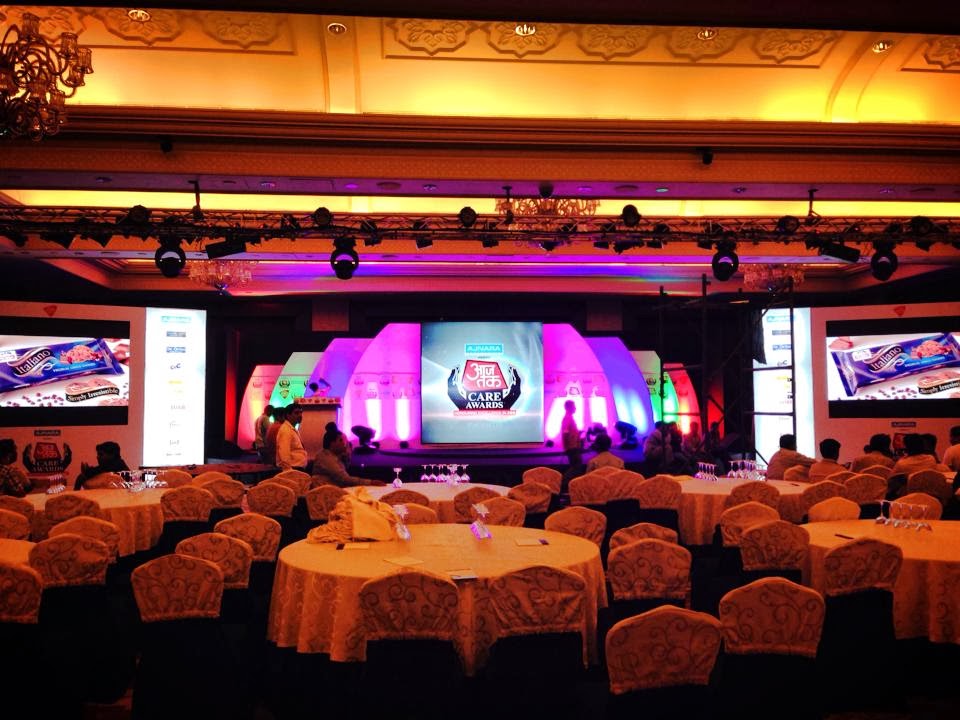
From political speeches, to award shows and seminars, stage lighting is often transparent. Its main purpose is to illuminate the speaker, and create a lighting mood that is comfortable for the audience, and is not distracting to the event or speaker. Carefully placed washes and fixed spotlights, filtered with muted whites and subdued colors, are a typical design. As in other lighting setups, programmed dimmers control the light intensity of each unit to achieve the desired effect.


Best Presentation Lighting Methods

Best presentation lighting methods include the use of filtered Fresnel and PAR flood and wash lights, mounted on elevated stands or trusses, and placed above and in front of the speaker and stage area. Floor lighting is sometimes added for illumination reinforcement.


photo shoot for primark summer collection

Unveiling of the Primark Spring Summer 2013 collection at their Russell Square Press Office. 
Lots of Wireless LED Lighting was used to highlight animation boards and the clothes themselves with a giant wall projection.

Sunday, 22 December 2013

About Stage Lighting

Stage lighting is an integral part of any performance. Whether it's a music concert, play, comedy show, or presentation, lighting enhances the experience. In situations where stage lighting is not a focal point, such as in a play or presentation, it is often taken for granted by the audience.

Stage Lighting Types
  • ·         Stage wash lights flood specific areas of the stage with soft-edged, color-filtered light.

  • ·         Fixed spotlights use hard-edged light to highlight performers or objects on the stage.

  • ·         Follow spots are manually operated by technicians to follow a moving performer across the stage.

  • ·         Used primarily in music concerts, specials are used to create special effects during the performance. Crowd "blinders," strobe lights, scanners, LED panels, projectors, and other light-emitting fixtures can be used as specials, as can wash and spot lights when employed in a no typical fashion.

  • ·         LED screens can act as special wash lighting, or programmed to display designs, images, and pictures.

  •   Projectors are another common special effect, used to project videos, images, pictures, designs, and colors across the stage or onto screens. 

Saturday, 21 December 2013

How to create CHARACTER to your Set Design?

  • ·         COLOR: a visual attribute of things, effects and intensity of hues and saturations, additive or subtractive from the appearance. It creates, depth, contrast and even gives warm to cool gradient of tones within the hues and saturated colors.

  • ·         TEXTURE: feel of a surface (depends on the type of surface desired), fabric or the quality to what it may feel or look like of something. The texture is viewed as a characteristic of its (object) appearance or the physical composition/visual appearance.

  • ·         DIMENSION: length, width and height of the form or shape, which is required to understand the proportion or magnitude/structure or size.

  • ·         FORM: Outlined shaped, visual appearance to compose or represent by the structure's characteristic or shaping.

  • ·         SCALE: a reference point of origin where the measurement of an object begins. It is incorporated to support the dimension and form of the object(s). It can create depth or bring and object towards the foreground versus background.

study photoshoot set up


This are kind of photo shoot set up developed by the art director to carry out various photo shoot .I am studying and exploring this kind of various set ups and build one of such kind for a fashion photo shoot by a ma student of photography.